Designing Amplify: Discovery for Purdue's Underground Music Scene
A 3-milestone UX engagement with Innovatemap · Purdue University, Fall 2023
A semester-long engagement across three milestones: research, synthesis, and prototyping.
Innovatemap is a product strategy and UX consultancy based in Indianapolis. They partner with product teams to accelerate UX capability, and periodically sponsor student UX projects through Purdue's program.
This project partnered our six-person team with Innovatemap to design Amplify: a platform for Purdue University's underground music scene, a thriving but informal network of bands, shows, and fans that operates almost entirely off the radar.
Purdue has an active underground music community: bands play basement shows, house venues, and campus spaces for audiences of 20 to 200. But the scene runs entirely on word of mouth and Instagram. If you don't already know someone in it, you can't find it.
The goal was to design a platform that could connect new fans to the scene without intruding on the systems that bands already rely on.
Purdue's underground community is real and active, but entirely self-contained. Three pain points surfaced consistently across every research method we used.
New fans had no way in. Shows were announced on private Instagram accounts or through group chats that required knowing the right person first. If you weren't already connected, the scene didn't exist to you.
Even fans who found shows often couldn't find the basics: location, cover charge, door time. Details were scattered across Instagram posts, stories, and DMs, and frequently changed without notice.
With no reviews, no recordings, and no community context, new attendees had no way to gauge whether a show was worth their Friday night. Experienced fans relied on social proof that newcomers simply didn't have access to.
We started where every design question starts: with the people. Our first milestone was dedicated to understanding concert-goers, their habits, motivations, and friction points, before touching any design tool.
We started with secondary research on music discovery platforms, community building apps, and prior work on underground music scenes. This gave us a framework before going into the field.
We interviewed 25+ concert-goers, spanning regular underground attendees and people who'd been once or never. We asked about how they found shows, what made them go or skip, and what they wished they'd known before arriving.
We mapped the fan journey across five stages: Discovery, Going, At the Show, Exiting, and After. Pain points concentrated in the first two, before fans ever arrived. That's where we focused the design work.
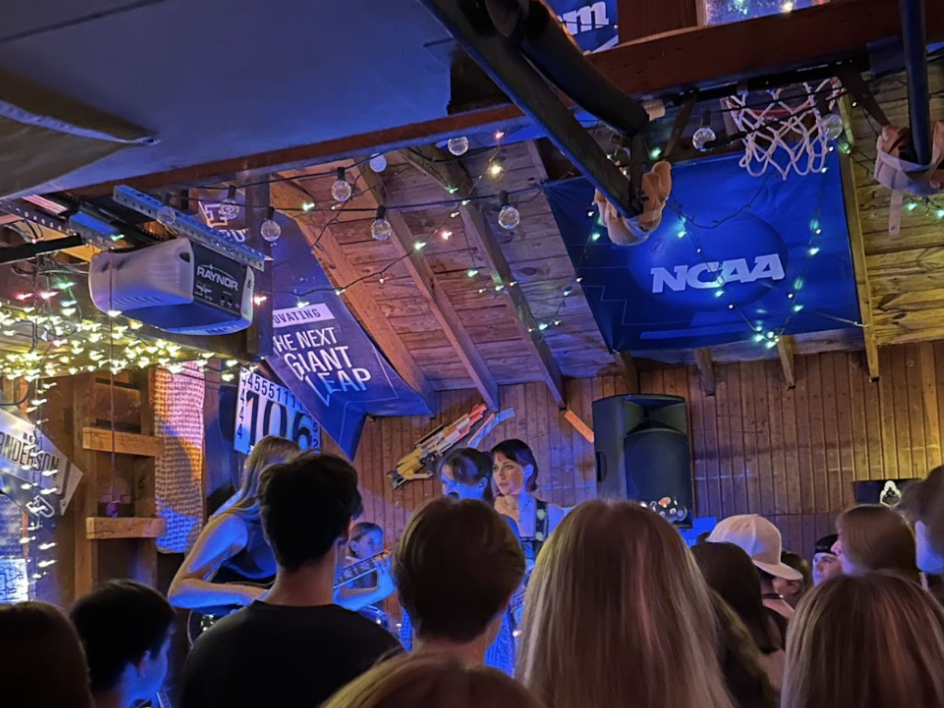
We attended an actual underground concert at Purdue, not as researchers with clipboards, but as participants. Watching how fans found their way in, interacted with bands, and shared the experience gave us things interviews couldn't.
Fans were half the picture. We needed to understand the bands: how they communicate, how they feel about their tools, and what they'd be willing to change.
We ran a 45-minute group interview with social media managers from four bands. Every one of them used Instagram exclusively: show announcements, fan communication, and coordinating with other acts. None of them wanted to migrate to a new platform.
We ran a two-hour design workshop at Krannert with six participants. The goal was to push beyond what people say they want and surface what they actually need, through structured activities rather than Q&A. The handoff concept came out of this session.
Every pain point traced back to the same root. Fans couldn't find shows because bands weren't communicating show details publicly. Bands weren't communicating publicly because their tools weren't built for it. Instagram's structure favors followers you already have, not discovery by strangers.
The design challenge wasn't to replace Instagram. Bands relied on it and weren't going to stop. The challenge was to build something alongside it: a platform that could surface what Instagram kept private, without asking bands to change anything about how they worked.
The central design decision from our workshop was to build a "handoff platform": one where users can choose whether to be on Instagram or on Amplify, with the app providing more information and recommendations while leaving Instagram's social graph intact.
Users can effortlessly transition from Instagram to Amplify and back again, from any show post or band profile link. The flow goes both directions without disrupting the experience on either platform.
Amplify handles what Instagram can't: structured show information, discovery for fans who aren't already following the right accounts, RSVP and attendance tracking, and community chats organized around shows and music genres.
The bands don't need to change anything. Show posters become event pages. Instagram group chats become the community layer. The platform works with existing behavior, not against it.
Based on our milestone 1 and milestone 2 insights, we asked: what features do we need? Which can be omitted? Does the solution address the pain points we found?
Each team member created their own sketches and shared them once everyone was done. This let us surface all of our ideas for features, layout, information hierarchy, and general design before converging, avoiding groupthink in the early phase.
We each made rough prototypes based on pulling ideas from each other's sketches. We then evaluated them and combined them into a final low-fidelity prototype for our first round of user testing.
The objective was to validate our design assumptions and refine the user experience based on real-world feedback. We guided participants through scenarios: flowing in and out of Instagram, RSVPing, community features, and accessing saved events.
Testing surfaced three issues: the Instagram banner looked like an ad, event change indicators were overlooked, and the RSVP screen implied payment was required upfront. We addressed each directly before moving to high fidelity.
From any show's page on Instagram or directly from the band's profile link, users can effortlessly transition to Amplify. Similarly, returning to Instagram is just as simple, whether from the Amplify band page or while engaging in the community chats. This bidirectional flow ensures users can smoothly switch between platforms without disrupting their experience.
The discovery page shows recommended shows, recommended bands, upcoming shows, and community chats. Users can search by band, show, or genre, and filter by location and date. Show art is prominently displayed, which fans love, and it encourages browsing beyond what you already know.
The band page serves as a gateway for users to delve deeper into the essence of a band. It includes a direct link to their Linktree, a succinct bio, and a prompt to revisit their Instagram profile. Upcoming shows are organized chronologically, and band members are listed individually.
Location, time, all bands performing, cover charge, additional info, all in one structured page. Users can Venmo ahead of time and add the show to their events list. Everything a first-time attendee needed but couldn't find before.
My Events organizes the shows a user is attending in a chronological list. Any updates to date, time, or location are highlighted in red to immediately capture attention. Users can join the Instagram group chat for each show directly from the event entry.
Enhancing the user experience meant leveraging Instagram's platform without disrupting its core functionality or navigating around its technical and policy constraints. We couldn't ask bands to change tools. The platform had to work with them, not around them.
The concept and structure of Amplify are well-developed, but the actual technical implementation and backend infrastructure remain in the conceptual stage. Technical feasibility, scalability, and integration with Instagram all require further development and testing before anything ships.
The prompt was open-ended: improve the underground scene. What made the project work was letting research narrow the problem space before any design happened. The journey map and band interview together made the handoff concept feel inevitable rather than invented.